How to Start a Clothing Brand in 2026: Complete Guide
How to Start a Clothing Brand in 2026: The Complete Step-by-Step Guide
Starting a clothing brand can begin with something as simple as an idea.
Maybe you have a few designs sitting in your sketchbook. Maybe you have noticed a gap in the market. Or maybe you simply want to build a brand that represents a particular style, lifestyle, or community.
Whatever your starting point, turning that idea into a real clothing brand takes more than putting a logo on a T-shirt.
You need to understand your customer, define your identity, develop the right products, choose how those products will be made, build a strong online presence, and create a launch strategy that gives people a reason to pay attention.
The good news? You do not need to have everything figured out on day one.
You need a clear process.
In this guide, we'll walk through the key steps to starting a clothing brand in 2026—from your first idea to your first collection and beyond. 👕✨
Before You Start: What Does It Actually Mean to Start a Clothing Brand?
A clothing brand is more than a collection of garments.
It is the combination of your:
Products + Identity + Customer + Experience
Your clothing might be streetwear, casualwear, activewear, luxury fashion, basics, modest fashion, or something completely different. The category matters—but so does the reason people should choose your brand instead of hundreds of alternatives.
A successful clothing business generally needs a clear target audience, a defined product direction, a sourcing or manufacturing model, pricing, an ecommerce setup, and a marketing plan. Current 2026 guides from major ecommerce platforms follow essentially this same journey, although the exact production model can vary.
So, where do you begin?
1. Find Your Niche 🎯
One of the first questions you should answer is:
Who are you making clothes for?
Trying to create a brand for “everyone” usually makes it harder to create a recognizable identity.
Instead, narrow your focus.
For example:
- Premium everyday essentials
- Modern streetwear
- Performance activewear
- Oversized casualwear
- Modest fashion
- Sustainable basics
- Outdoor apparel
- Athleisure
- Custom teamwear
- Fashion for a specific lifestyle or community
Your niche should sit at the intersection of what you want to create, what your audience wants, and where you can realistically compete.
Start with your customer—not your logo.
Think about:
Who are they?
What do they wear?
What brands do they already buy?
What price range feels realistic to them?
What do they care about?
What problem or desire does your clothing address?
For example, “I want to make cool T-shirts” is an idea.
“I want to create heavyweight everyday streetwear for young customers who prefer clean, oversized silhouettes” is a much clearer direction.
That clarity will influence almost every decision that follows.
2. Research the Market Before Spending Money 🔎
Before ordering fabric, samples, packaging or inventory, spend some time researching the market.
Look at brands operating in your space and study:
- Their product range
- Pricing
- Fabrics and product descriptions
- Photography
- Website experience
- Social media content
- Customer reviews
- Best-selling products
- How they communicate their brand
You are not researching competitors so you can copy them.
You are looking for patterns.
What seems to work repeatedly? Where are customers asking for something different? What product categories are overcrowded? Where might there be an opportunity to create a stronger offer?
You can also use search engines, social platforms, customer reviews and tools such as Google Trends to understand what people are actively interested in.
The goal is simple:
Do your research before your money does the talking.
3. Define Your Brand Identity 🖤
A clothing brand needs a recognizable identity.
And that identity goes far beyond your logo.
Think about your:
Brand name
Logo
Colors
Typography
Photography style
Packaging
Tone of voice
Product aesthetic
Customer experience
Ask yourself:
What should someone feel when they see my brand?
Maybe the answer is:
Minimal.
Bold.
Technical.
Premium.
Raw.
Modern.
Sport-focused.
Relaxed.
Experimental.
Your identity should feel consistent everywhere—from your Instagram profile to your garment labels and website.
A strong brand identity also makes future marketing much easier because you're not reinventing your visual direction every time you create something new.
4. Decide What Type of Clothing Brand You Want to Build
There isn't just one way to start a clothing business.
Your production model can affect your budget, customization, inventory requirements and level of control.
Print-on-Demand
With print-on-demand, products are generally produced when an order is placed.
This can reduce the need to hold inventory and can be useful for testing designs, but customization and garment selection may be more limited.
Dropshipping
In a dropshipping model, a supplier handles inventory and fulfillment while you focus more heavily on the customer-facing side of the business.
This can reduce upfront inventory requirements, but you typically have less control over the actual product and manufacturing process.
Private Label
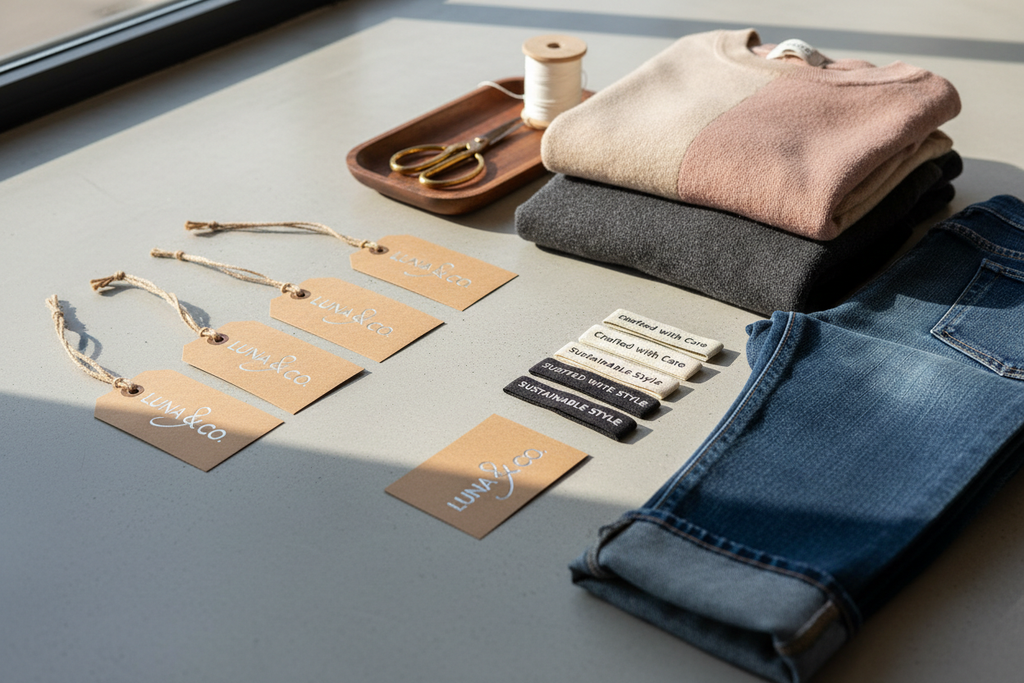
Private label allows you to sell products under your own brand identity, potentially including your labels, branding and packaging depending on the supplier and production arrangement.
This can be useful for emerging brands that want more control without building an entire factory operation themselves.
Custom Manufacturing
Custom manufacturing gives you much greater control over elements such as:
- Fabric
- Fit
- Measurements
- Construction
- Colors
- Trims
- Labels
- Printing
- Embroidery
- Packaging
The right choice depends on your goals, budget, desired level of customization and expected order volume.
There isn't a universal model that works for every clothing business.
5. Develop Your First Collection 👕
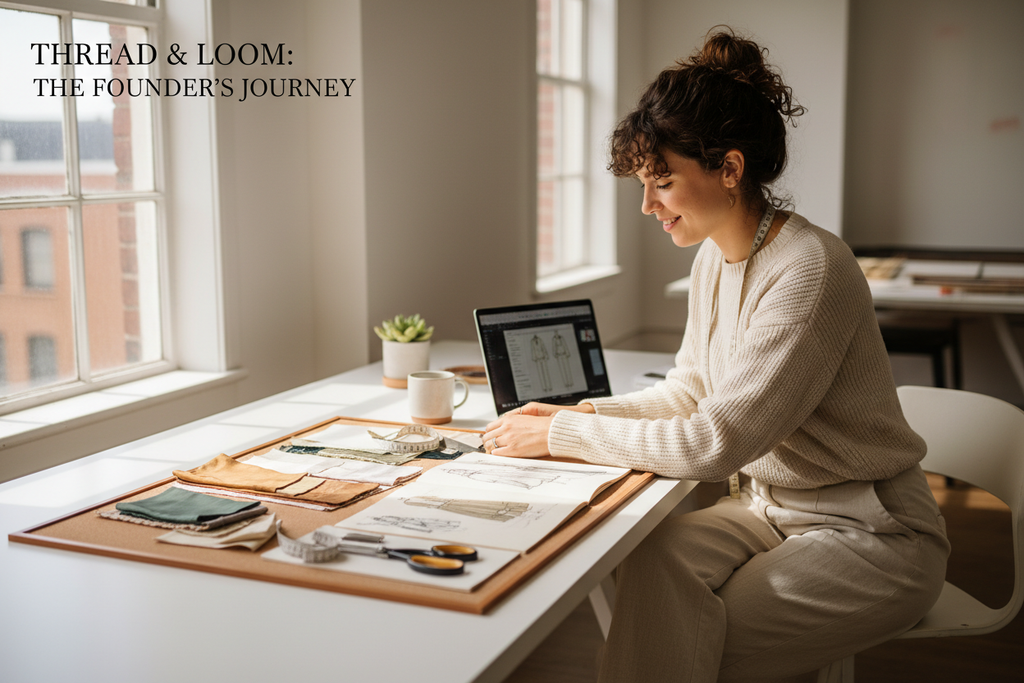
This is where your idea becomes a product.
Rather than trying to launch dozens of pieces immediately, think about creating a cohesive first collection.
Your first range could revolve around a small number of core products that work together visually and commercially.
For example:
Oversized T-Shirt
Heavyweight T-Shirt
Hoodie
Joggers
Polo
Shorts
The exact products depend on your niche.
What matters is consistency.
Think about:
Fit
Oversized? Regular? Slim? Relaxed?
Fabric
Cotton? Polyester? Fleece? French terry? Blends?
Weight
Lightweight? Midweight? Heavyweight?
Colors
Which colors actually make sense for your collection?
Details
Pockets, trims, stitching, cuffs, collars, drawcords and other construction elements can completely change how a garment feels.
Branding
Where will your logo or artwork appear?
Packaging
How will the customer receive the product?
Quality and consistency matter more than simply having a large number of products.
6. Create Proper Product Specifications
Once you move from an idea to actual production, communication becomes extremely important.
A manufacturer cannot reliably produce a garment from “make it oversized and premium.” 😅
You need clearer specifications.
Depending on your product, this can include:
- Garment measurements
- Fabric composition
- Fabric weight
- Colors
- Stitching details
- Artwork placement
- Print specifications
- Embroidery details
- Labels
- Trims
- Packaging requirements
- Size grading
- Construction details
For more technical collections, this information can be organized into a tech pack.
A clear specification document helps reduce misunderstandings between a brand and its manufacturing partner.
And when you're creating a custom product, the more precisely the product is communicated, the easier it becomes to evaluate a sample against the original requirements.
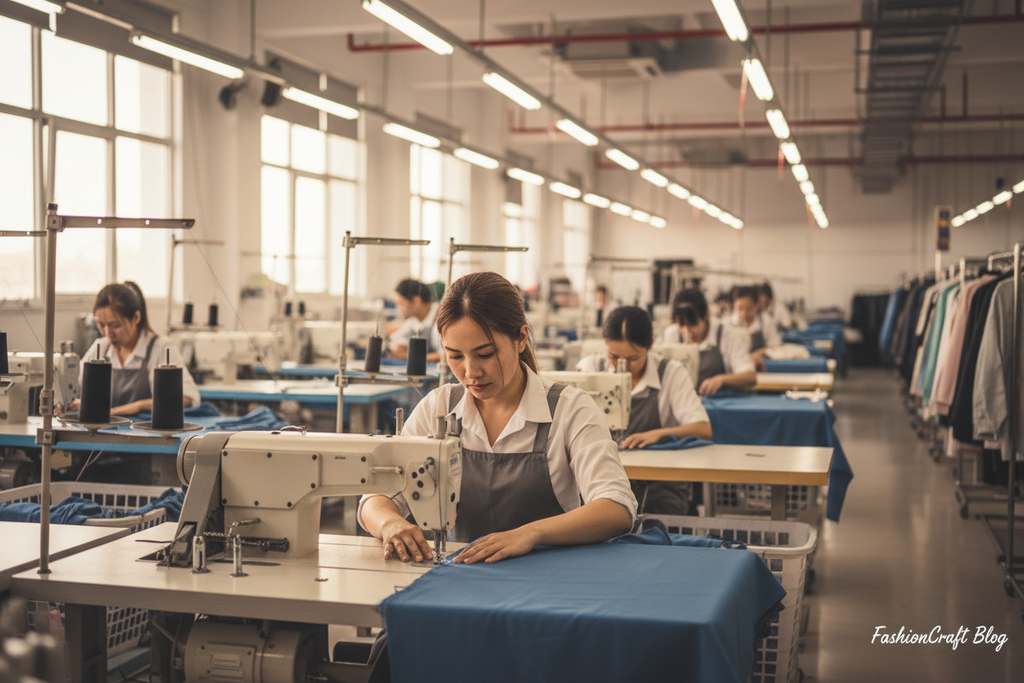
7. Find the Right Clothing Manufacturer 🧵
For many first-time founders, this is one of the biggest steps.
You may have an excellent concept—but you still need someone who can turn that concept into a consistent physical product.
When comparing manufacturers, consider:
- MOQ (Minimum Order Quantity)
- Sampling options
- Fabric sourcing
- Production capabilities
- Customization
- Quality control
- Communication
- Lead times
- Packaging
- Shipping/export capabilities
Don't choose a manufacturer based on price alone.
A lower quotation isn't necessarily a lower total cost if the final product requires expensive corrections, causes delays or doesn't meet your specifications.
A good manufacturing relationship should be based on clear communication, realistic expectations and agreed specifications.
8. Always Approve Samples Before Bulk Production ✅
This step deserves serious attention.
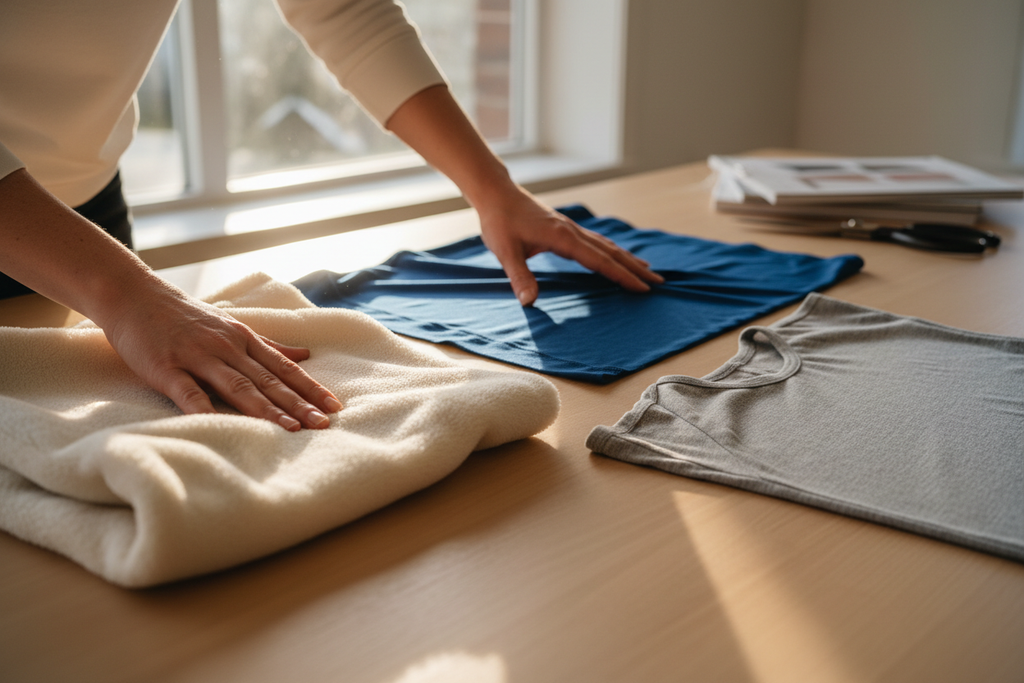
A sample gives you the opportunity to evaluate the actual product before committing to a larger production run.
Check everything.
Product Checklist
Fit — Does it sit correctly on the body?
Measurements — Are the dimensions accurate?
Fabric — Does it feel and perform as expected?
Color — Is the actual color consistent with your requirements?
Stitching — Are seams clean and secure?
Print/Embroidery — Is the artwork positioned and produced correctly?
Labels — Are branding details accurate?
Construction — Does the garment feel right when worn?
Don't approve something because it “looks close enough.”
The sample stage is where you have the opportunity to identify problems before they become a larger production issue.
9. Work Out Your Pricing 💰
Pricing is about more than adding a random markup to manufacturing cost.
Your real product cost can include:
Manufacturing
- Labels & trims
- Packaging
- Shipping
- Duties/taxes where applicable
- Photography/content
- Website/ecommerce costs
- Payment fees
- Marketing
- Returns/replacements
- Other operating expenses
This gives you a much more realistic picture of your economics.
Then consider your desired retail positioning.
A premium brand, for example, needs its product, presentation and customer experience to support the price.
Your price should make sense for both your business and your target customer.
10. Build Your Online Clothing Store 🌐
Your website is often the first serious interaction someone has with your brand.
It should communicate three things quickly:
What do you sell?
Who is it for?
Why should people care?
A good clothing website should have:
- Clear navigation
- High-quality product photography
- Accurate product descriptions
- Size information
- Fabric details
- Clear pricing
- Shipping information
- Returns/exchange information
- Mobile-friendly design
- Secure checkout
- Strong brand consistency
Your photography deserves special attention.
Clothing is visual.
Customers want to understand the fit, fabric, details, silhouette and real-life appearance before buying.
Your product pages should therefore work almost like a salesperson—answering the questions a customer would normally ask before purchasing.
11. Build Interest Before You Launch 🚀
One of the most common mistakes is waiting until launch day to start marketing.
Your audience should ideally see the brand before the products go live.
You can share:
📌 Brand introduction
📌 Moodboards
📌 Design concepts
📌 Fabric selection
📌 Sampling
📌 Behind-the-scenes production
📌 Product details
📌 Packaging
📌 Sneak peeks
📌 Launch countdowns
This turns your launch into a story, rather than a random product upload.
You can also build an email list or early-access audience before launch.
The objective isn't simply to collect followers.
It's to build a group of people who are actually interested in what you're creating.
12. Create a Marketing Strategy That Fits Your Brand 📱
After launching, marketing becomes an ongoing part of the business.
Your strategy can include:
Instagram
TikTok
Influencer/creator collaborations
Email marketing
SEO
Paid advertising
UGC content
Organic social content
Community building
But don't try to do everything at once.
Start with the platforms where your target customer actually spends time.
And remember:
Content should show the brand—not just the product.
Instead of posting the same product photo repeatedly, show:
The fit.
The details.
The design process.
The people behind the brand.
The inspiration.
The lifestyle.
The customer experience.
Modern clothing brands compete not only through products, but also through how effectively they communicate their identity online.
13. Launch Small, Learn Fast
Your first collection doesn't need to define your entire future.
Think of it as your first major learning cycle.
Pay attention to:
- Which products receive the most attention
- Which sizes sell
- Which colors perform well
- What customers ask
- Why people hesitate to purchase
- Which marketing channels bring visitors
- Which products generate repeat interest
Then use that information to improve your next collection.
This is where the difference between launching a clothing brand and building a clothing business begins to become clear.
A brand evolves.
Your first collection is the beginning—not the finished product.
14. Build a Brand, Not Just a Store
A store sells products.
A brand creates recognition.
Over time, your goal should be to make your customers recognize your:
Style
Fit
Quality
Visual identity
Voice
Packaging
Experience
That consistency is what helps turn individual products into a recognizable clothing label.
You don't need to look like every established fashion company from day one.
You need to know what your brand stands for and express it consistently.
💡 What Do You Actually Need to Start a Clothing Brand?
At the most basic level, you need:
01 — A clear concept
Know what you're creating and why.
02 — A defined customer
Know who you're designing for.
03 — A product direction
Decide what your first collection will look like.
04 — A production model
Choose how you'll source or manufacture your garments.
05 — Samples
Test your products before committing to production.
06 — A brand identity
Create a consistent name, visual direction and message.
07 — Pricing
Understand your real costs and your intended market position.
08 — An online presence
Give customers a professional place to discover and purchase your products.
09 — A launch strategy
Build interest before you expect sales.
10 — Patience
Your first launch is a starting point—not a final verdict.
❓ Frequently Asked Questions
How much does it cost to start a clothing brand?
There is no single startup cost that applies to every clothing brand.
Your investment depends heavily on your production model, number of products, quantity, fabric choices, sampling, branding, packaging, marketing and ecommerce setup.
A print-on-demand business can have a very different cost structure from a custom cut-and-sew collection.
The best approach is to calculate your expected costs before placing your first production order.
Can I start a clothing brand with no experience?
Yes, but expect a learning curve.
You don't necessarily need years of fashion-industry experience to begin. What you do need is the willingness to learn about product development, sourcing, manufacturing, branding, ecommerce and marketing.
Start with a manageable collection, work with experienced partners where necessary, and learn from each production cycle.
How many products should I launch with?
There is no fixed number.
For many new brands, starting with a focused collection can make inventory, photography, marketing and quality control easier to manage.
The goal is not to launch the biggest collection.
The goal is to launch a cohesive collection you can execute well.
Do I need a clothing manufacturer?
Not necessarily.
Some brands use print-on-demand, dropshipping, in-house production, private-label manufacturing or custom manufacturing.
The right model depends on your product, budget, desired customization and business goals.
What is MOQ in clothing manufacturing?
MOQ stands for Minimum Order Quantity.
It refers to the minimum quantity a manufacturer is willing to produce for a particular order or product.
MOQ can vary significantly between manufacturers and production models, so it should always be discussed before ordering.
Do I need a tech pack to start a clothing brand?
Not every clothing business requires the same level of technical documentation.
However, for custom manufacturing, detailed specifications can make communication much easier by clearly defining measurements, materials, construction, artwork and other product requirements.
Should I order samples before bulk production?
Yes, a pre-production sample or development sample can help you evaluate the garment before committing to a larger production quantity.
Fit, measurements, materials, construction, branding and finishing should all be reviewed carefully.
Can I start a clothing brand online?
Absolutely.
An online store allows a clothing brand to showcase its collection, build its identity, communicate with customers and sell without relying exclusively on a physical retail location.
But the website itself is only one part of the business. Product quality, customer service, marketing and fulfillment still matter.
Final Thoughts
Starting a clothing brand in 2026 is easier to begin than ever—but building one that people remember requires more than a good logo or a few products.
Start with a clear idea.
Understand your customer.
Develop products carefully.
Choose your manufacturing model wisely.
Sample before scaling.
Build a brand people can recognize.
And most importantly, keep improving with every collection.
Your first sketch can become a sample.
Your sample can become a product.
And with the right process, that product can become the beginning of a real brand. 🖤
Ready to turn your clothing idea into a real collection?
From product development and custom apparel to branding and production, the right manufacturing partner can help move an idea from concept toward finished garments.
Explore Freedy Apperals Custom Orders and start a conversation about your next collection.